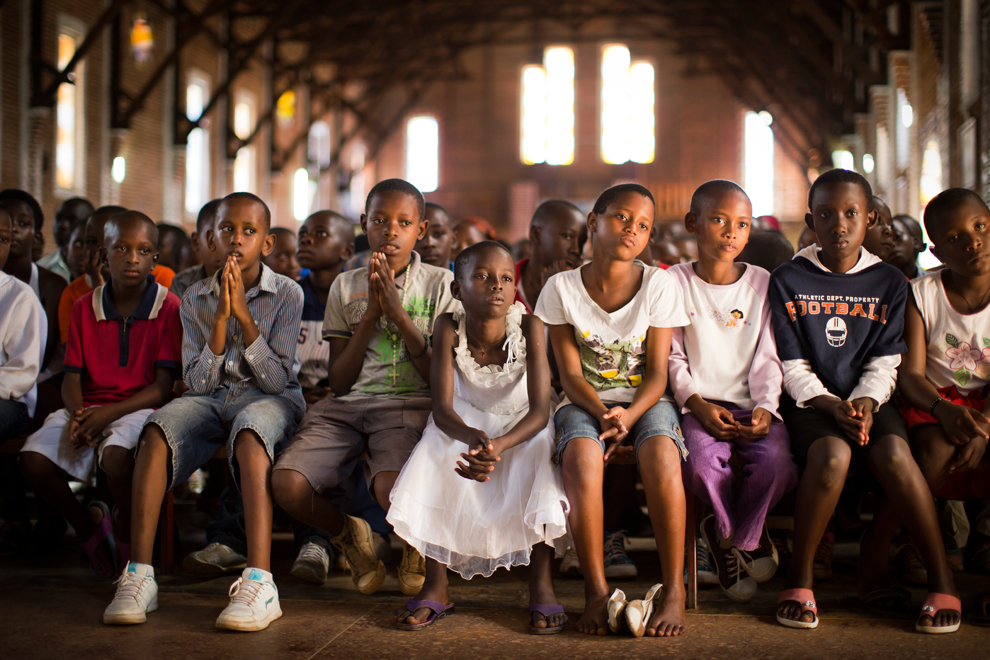
Tα ρούχα των νεκρών βρίσκονται φυλαγμένα στην εκκλησία της Νyamata στη Ρουάντα
800.000 Τούτσι αλλά και μετριοπαθείς Χούτου, θα σφαγιαστούν μέσα σε ένα διάστημα τριών μηνών, σε ένα από τα πιο φρικιαστικά «ρεκόρ» του εικοστού αιώνα.
Ο διαχωρισμός μεταξύ της φυλής των Τούτσι και της φυλής των Χούτου κατασκευάστηκε και υποδαυλίστηκε ιστορικά από τη Βελγική αποικιοκρατεία του πρώτου μισού του 20ου αιώνα, με βάση τις ξεπερασμένες φυλετικές θεωρίες των ρατσιστών αποικιοκρατών καπιταλιστών, που μετρούσαν μεγέθη κεφαλιών, χαρακτηριστικά προσώπου κτλ, σε μια προσπάθεια να διχάσουν πολιτικά τον πληθυσμό.
«Παραδοσιακά» οι Τούτσι ήταν μειονότητα στην οποία οι Βέλγοι έδωσαν διοικητικές θέσεις και κοινωνικά προνόμια, διχάζοντας και άλλο την κοινωνία της Ρουάντα.
Οι Γάλλοι ήξεραν για τις παραστρατιωτικές-παρακρατικές μιλίτσιες( Interawame ), όπως και οι Βέλγοι, ενώ ποτέ δεν σταμάτησαν οι ψίθυροι για την εμπλοκή Βελγικών και Γαλλικών εταιριών όπλων. Το ίδιο ήξεραν και οι μυστικές υπηρεσίες των ΗΠΑ όπως και οι υπόλοιπες δυνάμεις, που έβλεπαν τα γεγονότα να έρχονται αλλά δεν έκαναν τίποτα.
Και πριν και κατά τη διάρκεια της γενοκτονίας η κυβέρνηση Κλίντον παρίστανε ότι δεν ήξερε, μη θέλoντας να πάρει ρίσκα που θα μπορούσαν να οδηγήσουν σε ένα δεύτερο περιστατικό όπως αυτό στη Σομαλία, με νεκρούς Αμερικάνους στρατιώτες. Το ίδιο ένοχα «μουδιασμένη» και η υπόλοιπα διεθνής κοινότητα και ο ΟΗΕ, συζητούσαν επί τρεις μήνες για το αν η κατάσταση στη Ρουάντα θα έπρεπε να χαρακτηριστεί ως «γενοκτονία», την ίδια ώρα που τα ποτάμια ξέβραζαν στις γειτονικές χώρες εκατοντάδες πτώματα πετσοκομμένα με ματσέτες.
Το ειρηνευτικό σώμα του ΟΗΕ στη Ρουάντα ήταν προορισμένο να παίξει τον θεατή, δίνωντας μια επίφαση νομιμότητας στις πράξεις της διεθνούς κοινότητας πριν και κατά τη διάρκεια της γενοκτονίας.
Τραγικές αλλά και ηρωικές φιγούρες από τη μεριά της Δύσης:
ο- ταξίαρχος τότε-, Ντ’Αλαίρ, Καναδικής καταγωγής ο οποίος αρνήθηκε να υπακούσει στις διαταγές του γενικού Γραμματέα του ΟΗΕ να εγκαταλείψει τη χώρα λέγωντας του να «πάει να γαμηθεί», σώζοντας έτσι χιλιάδες ζωές, με μια δύναμη 250 αντρών, μόνο και μόνο με το να βρίσκεται εκεί ως παρατηρητής των σφαγών της Interawame. Όταν γύρισε στο Καναδά έκανε απόπειρες αυτοκτονίας, έγραψε ένα βιβλίο που έγινε και ταινία το Shake Hands With The Devil, ενώ δέκα χρόνια μετά στάθηκε στο ίδιο αυτό στάδιο της Ρουάντα ζητώντας συγνώμη για΄τι δεν μπόρεσε να αποτρέψει τη γενοκτονία, μαρτυρώντας καταχειροκροτούμενος : Σε τηλεφωνική συνομιλία με αξιωματούχο του ΟΗΕ, όταν άρχισε να φωνάζει για γενοκτονία, ο αξιωματούχος του απάντησε εμμέσως πως οι νεκροί ήταν μαύροι και πως η Αφρική είχε πρόβλημα υπερπληθυσμού.
O αρχηγός της αποστολής του Ερυθρού Σταυρού στη Ρουάντα, οποίος έσωσε κόσμο και κατάφερε να ευαισθητοποιήσει τα διεθνή media με την επιμονή του να τραβάνε οι ρεπόρτερ τα θύματα στα νοσοκομεία.
Ο λοχαγός του ΟΗΕ από το Καμερούν που άοπλος περνούσε από τα σημεία ελέγχου μεταφέροντας κόσμο, λέγοντας πως είναι υπό τη προστασία του ΟΗΕ. Βρέθηκε δολοφονημένος μέσα στο αμάξι του σε ένα σταυροδρόμι της πρωτεύουσας.
Ο ιδιοκτήτης του διάσημου πλέον ξενοδοχείου, από τη ταινία Hotel Rwanda.
Μόνο φρίκη μπορεί να προκαλέσει μια «μικρή» λεπτομέρεια.
Οι σφαγές προπαγανδίστηκαν από τα τοπικά ραδιόφωνα με τους παραγωγούς να αποκαλούν «κατσαρίδες» τους Τούτσι. Την ίδια ακριβώς άποψη είχαν και οι «κάτοικοι του Αγίου Παντελεήμονα» για τους μετανάστες, όταν ξεκίνησαν τη δράση τους το 2009, υποβοηθούμενοι από το ελληνικό κράτος και τα ΜΜΕ.
Γιατί αν μας διδάσκει κάτι η ιστορία του 21ου αιώνα, είναι το μέχρι που μπορούν να φτάσουν Κράτος και Κεφάλαιο, οι διπλωμάτες τους, τα media και το παρακράτος τους.
Δείτε:
το ντοκιμαντέρ του PBS: Ghosts of Rwanda
τη ταινία βασισμένη στο ομώνυμο βιβλίο του Ντ’ Αλέρ: Shake Hands With the Devil , όπως και το ομώνυμο ντοκιμαντέρ.
Πηγη: fb Risinggalaxy
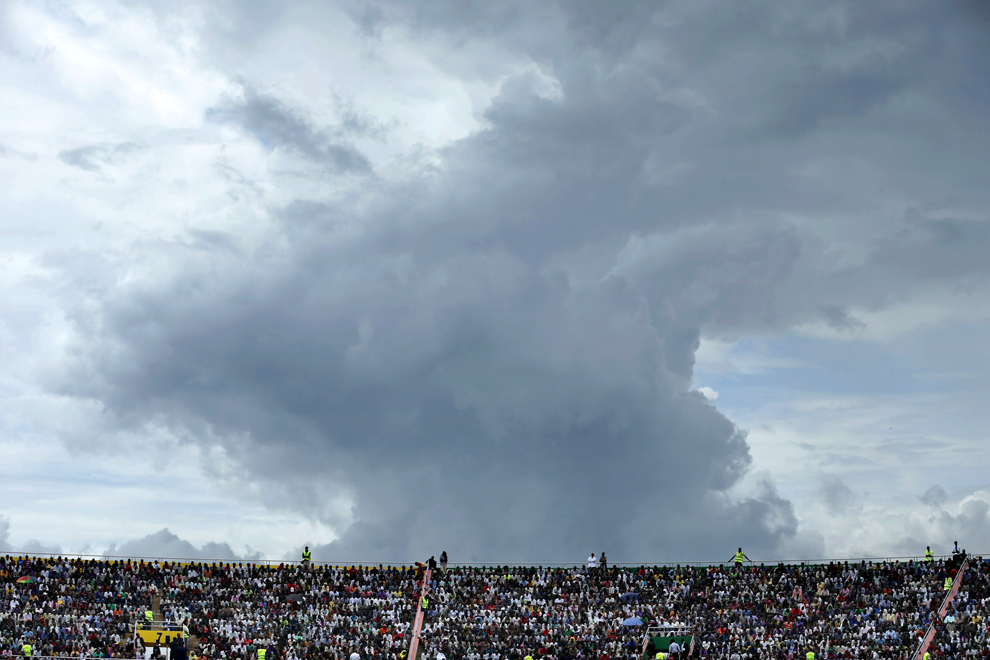
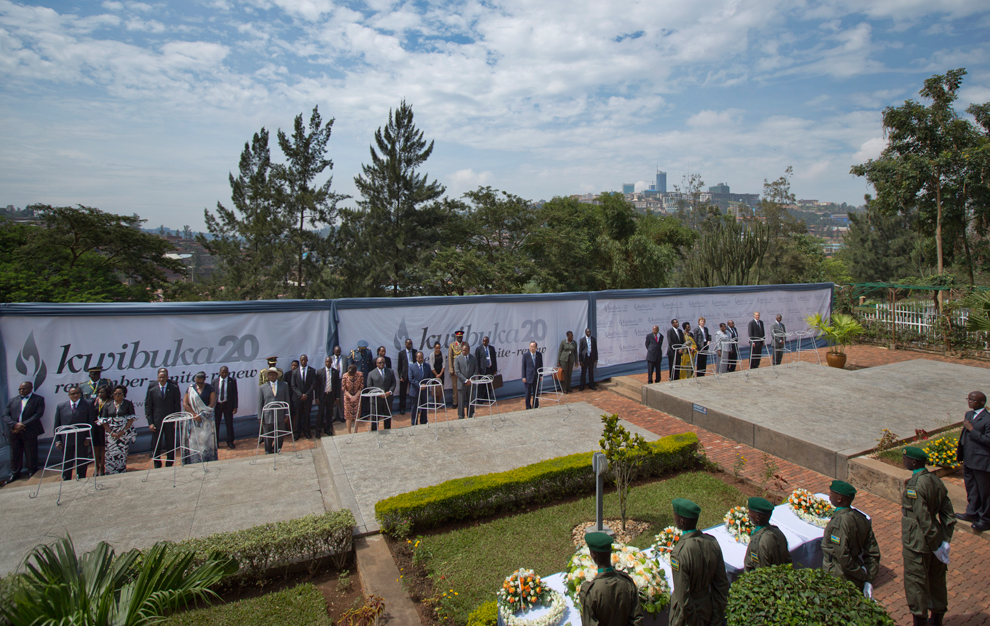
The sky threatens rain as tens of thousands of people gather to commemorate the 20th anniversary the 1994 genocide at Amahoro Stadium April 7, 2014 in Kigali, Rwanda. Rwandans joined with leaders from around the world at the stadium to remember the country’s 1994 genocide. (Chip Somodevilla/Getty Images) #
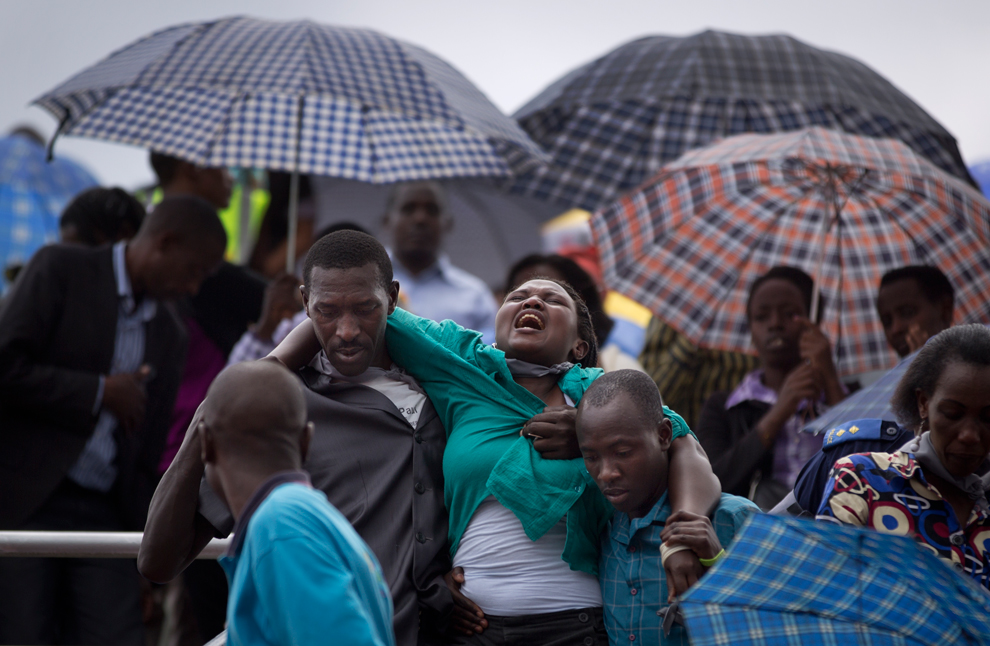
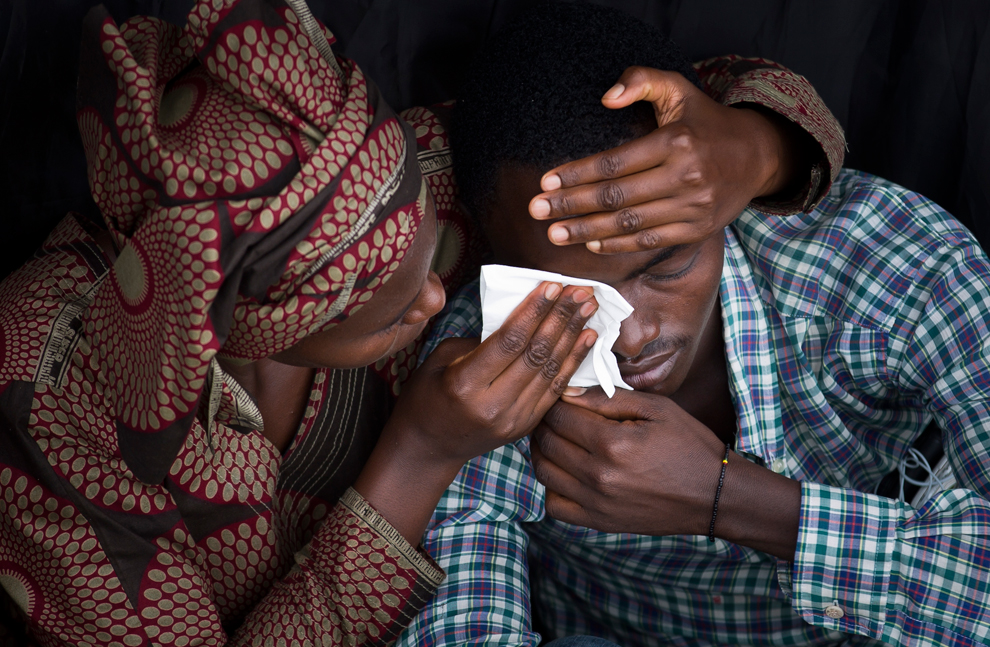
A wailing and distraught Rwandan woman, one of dozens overcome by grief at recalling the horror of the genocide, is carried away to receive help during a public ceremony to mark the 20th anniversary of the Rwandan genocide, at Amahoro stadium in Kigali, Rwanda, Monday, April 7, 2014. (Ben Curtis/AP) #

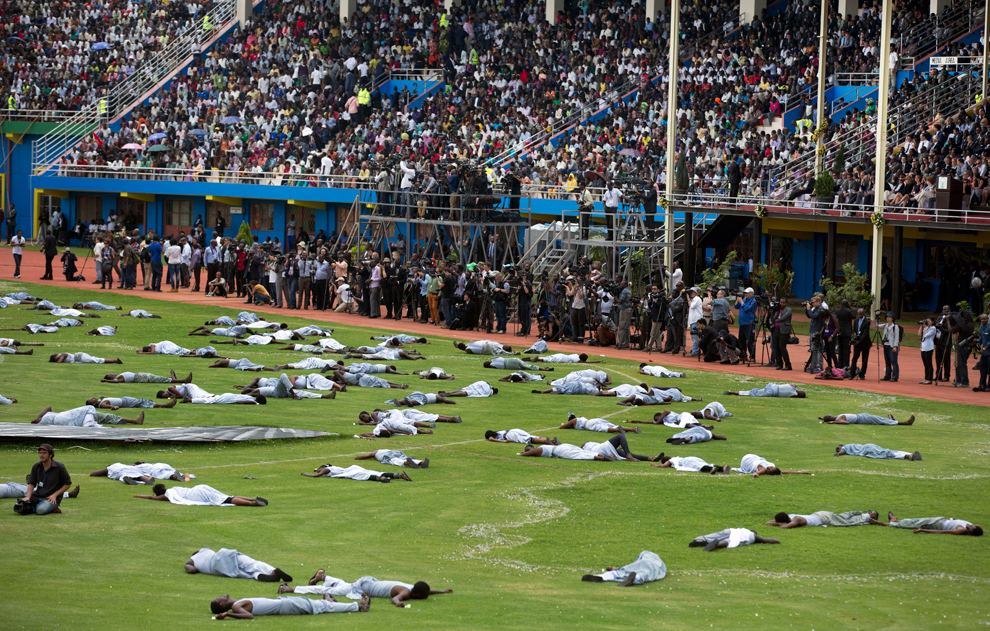

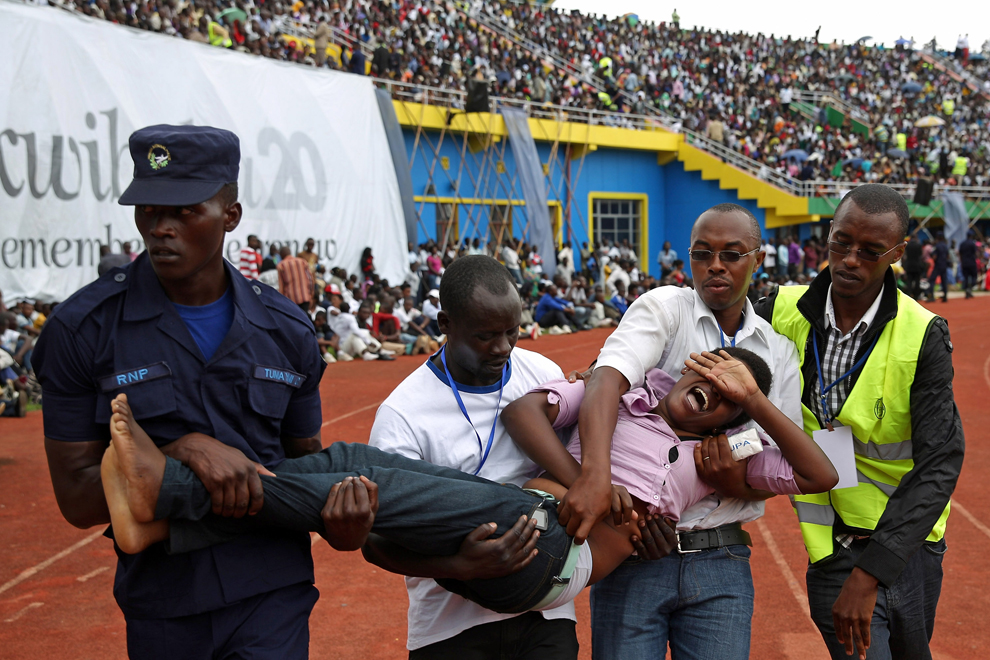
A woman is helped out of the Amahoro stadium, in Kigali, on April 7,2014. Rwandan President Paul Kagame took a thinly veiled swipe at France on April 7, saying it was impossible to «change the facts» about the genocide 20 years ago. Reminders of festering anger have marked the anniversary with a major diplomatic row breaking out over renewed allegations of French complicity in the genocide. Paris had cancelled a ministerial visit in response to renewed accusations by Kagame, and on April 7 the French ambassador was in turn barred from attending commemoration ceremonies. (Simon Maina/AFP/Getty Images) #
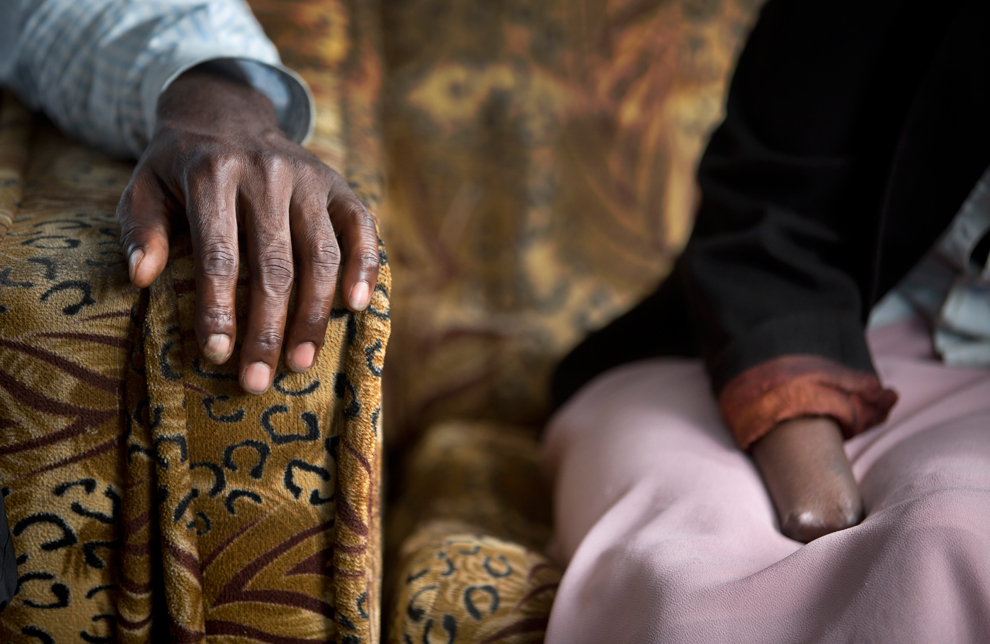
Emmanuel Ndayisaba, left, and Alice Mukarurinda, recount their experiences of the Rwandan genocide at Alice’s house in Nyamata, Rwanda Wednesday, March 26, 2014. She lost her baby daughter and her right hand to a manic killing spree. He wielded the machete that took both. Yet today, despite coming from opposite sides of an unspeakable shared past, Alice Mukarurinda and Emmanuel Ndayisaba are friends. She is the treasurer and he the vice president of a group that builds simple brick houses for genocide survivors. They live near each other and shop at the same market. Their story of ethnic violence, extreme guilt and, to some degree, reconciliation is the story of Rwanda today. The Rwandan government is still accused by human rights groups of holding an iron grip on power, stifling dissent and killing political opponents. But even critics give President Paul Kagame credit for leading the country toward a peace that seemed all but impossible two decades ago. (Ben Curtis/AP) #
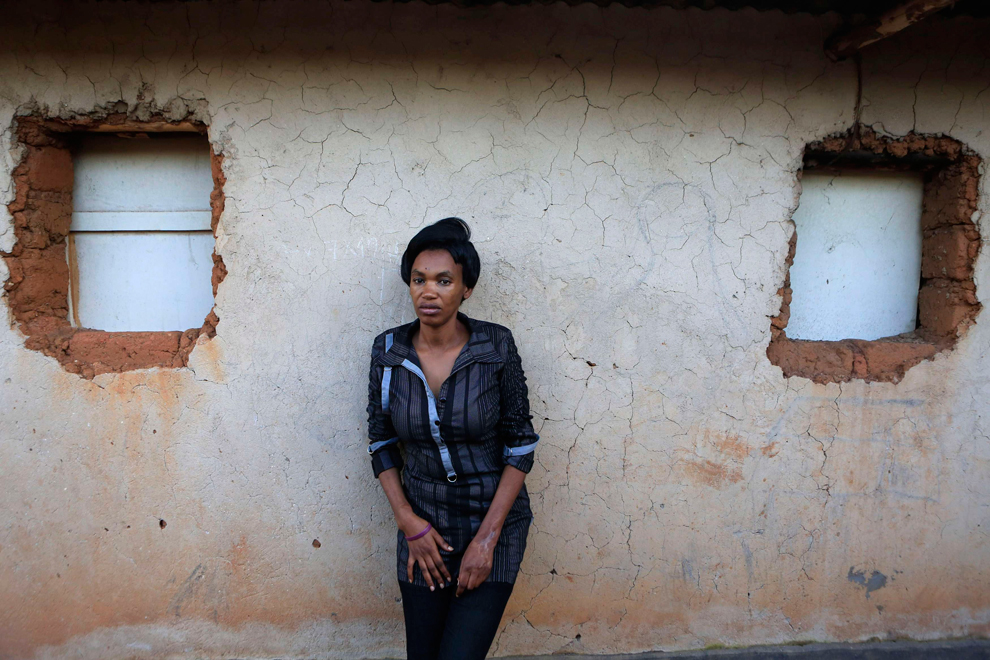
Mudahogora Ernestine, 34, poses for photographs outside her home in the suburbs of the Rwandan capital Kigali April 3, 2014. Ernestine is the sole survivor in her family of seven in the 1994 genocide that left her with visible injuries on her neck, hands and other parts of her body. The three-month killing spree in 1994 by Hutu extremists followed the fatal downing of a plane carrying Rwandan President Juvenal Habyarimana. (Noor Khamis/Reuters) #
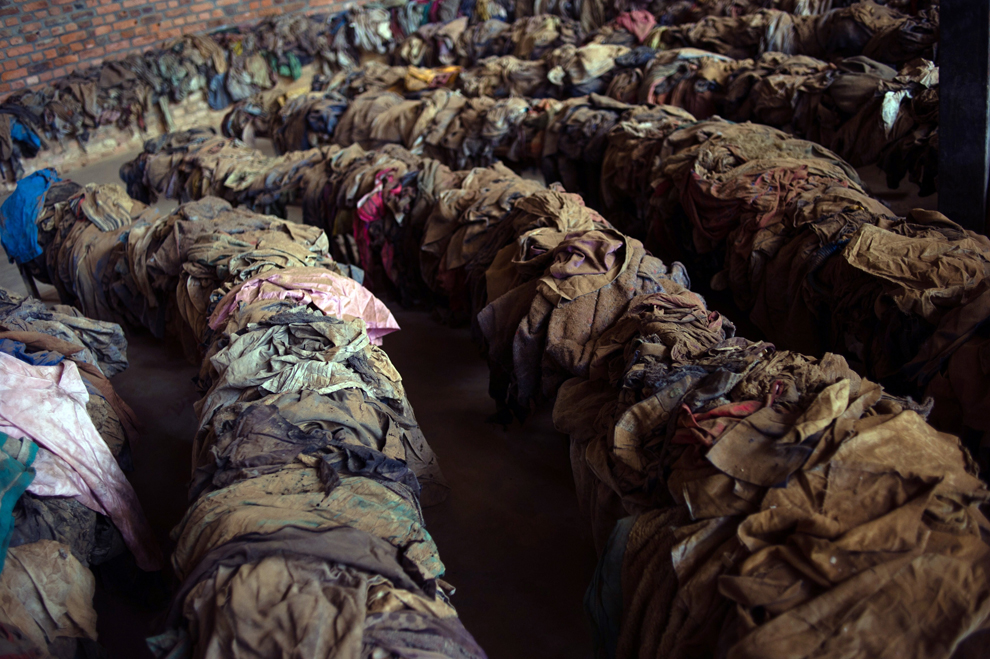
The clothes of victims killed during the Rwandan genocide are laid out on benches in the Nyamata Church in Nyamata, Rwanda. Nyamata and the surrounding area suffered some of the worst violence during the 1994 Genocide Against the Tutsi, with thousands of people killed in and around the church, which now stands as a memorial to the genocide. A survey showed that 26 percent of the Rwandan population suffers from post-traumatic stress disorder, yet the country lacks the adequate mental health facilities needed to address this issue. (Phil Moore/AFP/Getty Images) #
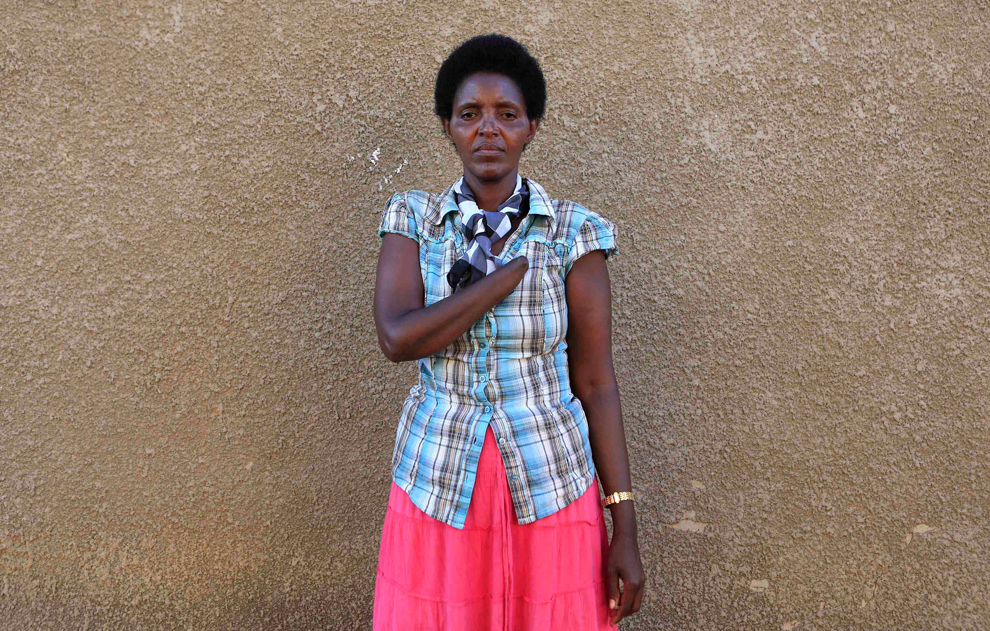
Mukarurinda Alise, 43, lost all her family members during mass killings in the 1994 genocide, but says she is now living with the man who hacked her wrist off. Alise forgave the man who she says went to the same school as her, after he came back and begged for forgiveness after serving time in jail for his crimes during a three-month killing spree in 1994 They are now married and living in Nyamata. (Noor Khamis/Reuters) #
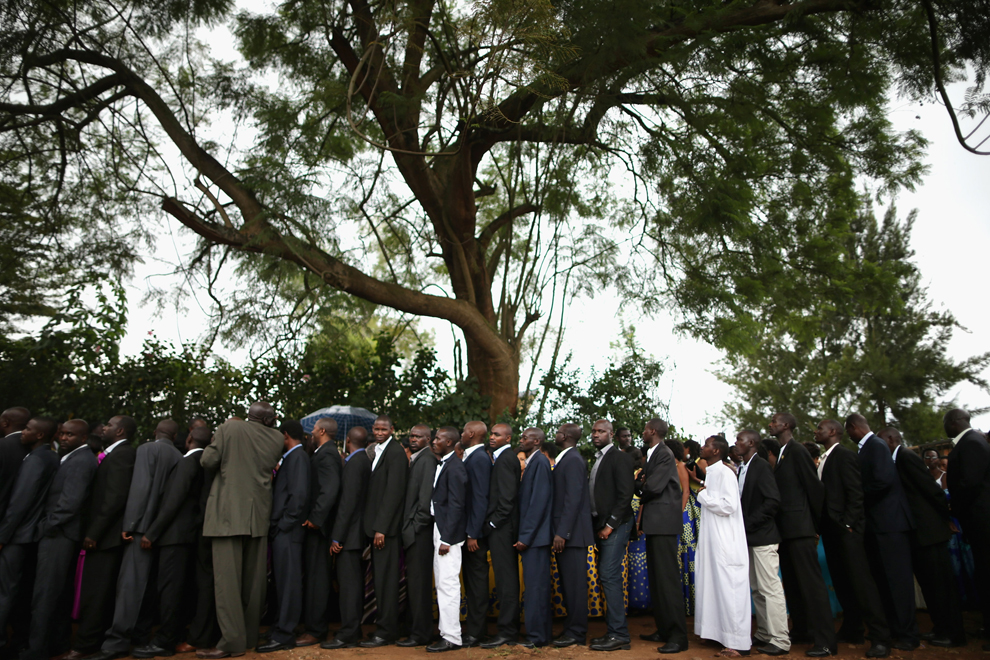
Men line up before marching to commemorate the genocide of 1994 at the Kicukiro College of Technology football pitch April 5, 2014 in Kigali, Rwanda. On April 11, 1994, Belgian paratroopers, who were part of the UNAMIR mission, were ordered to leave the school grounds, abandoning the people to the national police and Interahamwe militia, who lead their victims to a garbage dump and slaughtered them. (Chip Somodevilla/Getty Images) #